

In the demanding worlds of construction, mining, and demolition, few attachments are as indispensable as the hydraulic rock breaker. These powerful tools transform excavators, backhoes, and skid steer loaders into precision demolition machines capable of fracturing the toughest materials. However, with multiple configurations available—from silenced box units to side-mounted hammers and tractor-mounted systems—selecting the right breaker can be challenging. Industry experts break down the key types of hydraulic breakers and their ideal applications.
Hydraulic rock breakers, also known as hydraulic hammers, use high-pressure hydraulic fluid to drive a piston that strikes a chisel or tool at high frequency, delivering massive impact energy to fracture rock, concrete, and other hard materials . These attachments are essential for applications ranging from primary rock breaking in quarries to precision demolition in urban environments .
Understanding Hydraulic Breaker Classifications
Before diving into specific types, it is important to understand that hydraulic breakers are typically classified by three main factors: mounting configuration (how they attach to the carrier machine), housing design (silenced versus open), and carrier compatibility (which machines they can be mounted on). The following guide explores the most common configurations found on job sites today.
Six Key Hydraulic Breaker Types and Their Applications
1. Box Silence Hydraulic Breaker
Box silence breakers feature a fully enclosed housing designed specifically to reduce operational noise levels. These breakers incorporate sound-dampening materials and vibration-absorbing mounts within a rugged steel box structure .
Key Features:
-
Enclosed housing with sound insulation materials
-
Urethane dampers to prevent vibration transmission to the carrier machine
-
Reduced external noise levels for urban compliance
-
Available in sizes ranging from mini-excavator to heavy construction models
Primary Applications:
-
Urban Construction Projects: Ideal for city centers with strict noise ordinances where work must proceed with minimal community disturbance
-
Residential Demolition: Perfect for selective demolition near occupied buildings
-
Night Work: Enables after-hours operations in noise-sensitive zones
-
Hospital and School Zones: Suitable for projects near institutions requiring quiet environments
The Hyundai HRB Series exemplifies this technology, with all models featuring silenced box housing specifically engineered for urban projects where noise reduction is paramount . These breakers maintain high impact energy while significantly reducing the acoustic footprint of demolition operations.
2. Side Hydraulic Breaker
Side-mounted hydraulic breakers are designed with the hammer mechanism positioned at the side of the mounting bracket rather than centered on top. This configuration offers distinct advantages for certain excavator operations and material applications .
Key Features:
-
Side-mounted design for enhanced maneuverability
-
Lighter weight profile reduces stress on the carrier machine
-
Easy to locate and control during precision operations
-
Available in various sizes for different excavator classes
Primary Applications:
-
Precision Excavation: Ideal for trenching and utility work requiring exact placement
-
Confined Space Operations: Perfect for working in tight urban sites or alongside structures
-
Marine Dredging: Suitable for underwater and waterfront demolition projects
-
Selective Demolition: Enables targeted removal without disturbing adjacent materials
According to Hawk Excavator, side breakers are “more conducive to excavate” and offer lighter weight profiles that reduce the risk of broken drill rods during operation . The HBH1250S model, designed for 15-25 ton excavators, demonstrates how side breakers combine versatility with sufficient power for mining, demolition, and quarry applications .
3. Top-Type Hydraulic Breaker
Top-type breakers, also called top-mount or flat-top breakers, feature a mounting configuration where the hammer mechanism is positioned above the bracket, with the carrier machine connecting at the top of the unit. This classic design remains popular for its power transfer efficiency .
Key Features:
-
Flat-top design provides larger work area and excellent operator visibility
-
Keeps breaker force and stick force aligned for maximum energy transfer
-
Reduces recoil and bending stress transferred to the carrier machine
-
Common footprint and hole pattern for versatility across multiple carriers
Primary Applications:
-
Heavy Demolition: Suitable for building demolition and structural removal
-
Quarry Operations: Effective for primary and secondary rock breaking
-
Infrastructure Projects: Ideal for bridge deck removal and highway rehabilitation
-
Mass Excavation: Perfect for large-scale site preparation
Cat B8 Hammers utilize this flat-top design specifically to increase impact power and reduce structural stress on backhoe loaders . By keeping the breaker force aligned with the stick, top-type breakers minimize the recoil that can damage carrier machines over time.
4. Backhoe Hydraulic Hammer
Backhoe-mounted hydraulic hammers are specifically engineered for attachment to backhoe loaders—versatile machines that combine a loader bucket on the front with an excavator arm on the back. These hammers are optimized for the hydraulic capacity and weight limitations of backhoe loaders .
Key Features:
-
Ergonomically positioned hydraulic lines for easy serviceability
-
Gas-fired design for consistent high production over time
-
Optimized for backhoe loader hydraulic systems
-
Available with various tool options for different materials
Primary Applications:
-
Concrete Demolition: Breaking sidewalks, driveways, and pavement
-
Site Preparation: Clearing rock and obstructions for new construction
-
Landscaping: Breaking frozen ground and removing stumps
-
Utility Repairs: Trenching through rocky terrain for pipe and cable installation
The Cat B8 Hammer, designed specifically for backhoe loaders, demonstrates how these attachments excel in light to medium demolition applications where maneuverability and quick attachment changes are essential .
5. Hydraulic Breaker for Tractor
Tractor-mounted hydraulic breakers represent a specialized category designed for agricultural and rural applications. These attachments are engineered to connect to tractors via the three-point hitch or front loader arms, utilizing the tractor’s hydraulic system for power.
Key Features:
-
Compatible with standard agricultural tractor hydraulics
-
Mounts via three-point hitch or front loader attachment points
-
Typically lighter duty than excavator-mounted equivalents
-
Designed for intermittent use in farming applications
Primary Applications:
-
Agricultural Land Clearing: Removing boulders and rock outcroppings from fields
-
Orchard and Vineyard Preparation: Breaking rocky soil for planting
-
Rural Road Maintenance: Repairing farm roads and lanes
-
Drainage Installation: Trenching through rocky terrain for field tiles
According to industry sources, farmers increasingly use hydraulic breakers to “remove stubborn tree stumps and break down large boulders for more efficient land use” . Tractor-mounted breakers bring demolition capabilities to operations that may not own dedicated excavators.
6. Hydraulic Hammer for Skid Steer Loader
Skid steer loader attachments represent one of the most versatile categories of hydraulic breakers. These compact units are engineered to match the hydraulic flow and weight limitations of skid steer loaders while delivering sufficient impact energy for light to medium demolition tasks .
Key Features:
-
Compact design optimized for skid steer loader dimensions
-
Lightweight construction for carrier machine stability
-
High blow frequency for rapid material reduction
-
Universal mounting plates for quick attachment changes
Primary Applications:
-
Landscaping: Breaking rock and concrete for hardscape installation
-
Site Prep: Clearing small obstructions and breaking pavement
-
Interior Demolition: Working inside existing structures with limited access
-
Utility Work: Trenching and breaking frozen ground
The Okada ORV550H, designed for skid steer loaders, weighs just 575 pounds yet delivers 550 foot-pounds of impact energy at frequencies up to 1,000 blows per minute . This combination of power and compact size makes skid steer breakers ideal for contractors who need demolition capability without dedicated heavy equipment.
Breaker Comparison at a Glance
| Breaker Type | Typical Carrier Machines | Primary Strength | Ideal Applications |
|---|---|---|---|
| Box Silence | Excavators (all sizes) | Noise reduction | Urban projects, night work, residential areas |
| Side | Excavators (10-25 ton) | Maneuverability | Trenching, confined spaces, marine work |
| Top-Type | Excavators, Backhoes | Power transfer | Heavy demolition, quarries, infrastructure |
| Backhoe | Backhoe Loaders | Versatility | Concrete breaking, site prep, utilities |
| Tractor | Agricultural Tractors | Rural accessibility | Land clearing, orchards, farm maintenance |
| Skid Steer | Skid Steer Loaders | Compact power | Landscaping, interior work, light demolition |
Matching Breaker to Material: Tool Selection Guide
Beyond the breaker type itself, the choice of working tool (chisel) significantly impacts performance. Different tool configurations are suited to different materials and applications :
| Tool Type | Best Applications | Material Suitability |
|---|---|---|
| Conical Moil Point | Demolition, concrete breaking, hard ground | General purpose, reinforced concrete |
| Pyramidal Moil Point | Trenching, general excavation, quarrying | Asphalt, reinforced concrete, mixed materials |
| Flat Wedge Chisel | Trenching, mass excavation, quarry demolition | Layered materials, reinforced concrete |
| Blunt Flat End | Block splitting, compacting abrasive materials | Concrete slabs, oversized boulders |
| Chisel-Type | Secondary breaking, precision work | Construction sites, controlled demolition |
Critical Selection Factors
When choosing a hydraulic breaker, several technical factors must be considered to ensure proper matching with the carrier machine -1:
-
Carrier Weight Class: The breaker must be sized appropriately for the excavator, backhoe, or skid steer. Too heavy a breaker can overload the carrier’s boom and hydraulics, while too light a breaker may not deliver enough power for tougher jobs .
-
Hydraulic Flow (L/min): Perhaps the most critical compatibility factor. If the breaker requires more flow than the carrier machine can supply, impact energy and productivity will suffer. Conversely, excess flow can damage the breaker .
-
Operating Pressure (Bar): Determines the force behind each hammer blow. Higher-pressure breakers deliver harder impacts suitable for deep rock fracturing .
-
Impact Rate (BPM): Balances power with speed. High-BPM breakers deliver many lighter blows for softer materials, while lower-BPM breakers deliver heavier blows for hard rock .
-
Tool Diameter: Larger diameter tools deliver more impact energy per blow for thick, hard materials, while smaller tools offer better precision .
Maintenance Best Practices
Regardless of type, all hydraulic breakers require regular maintenance to perform optimally. Industry experts recommend –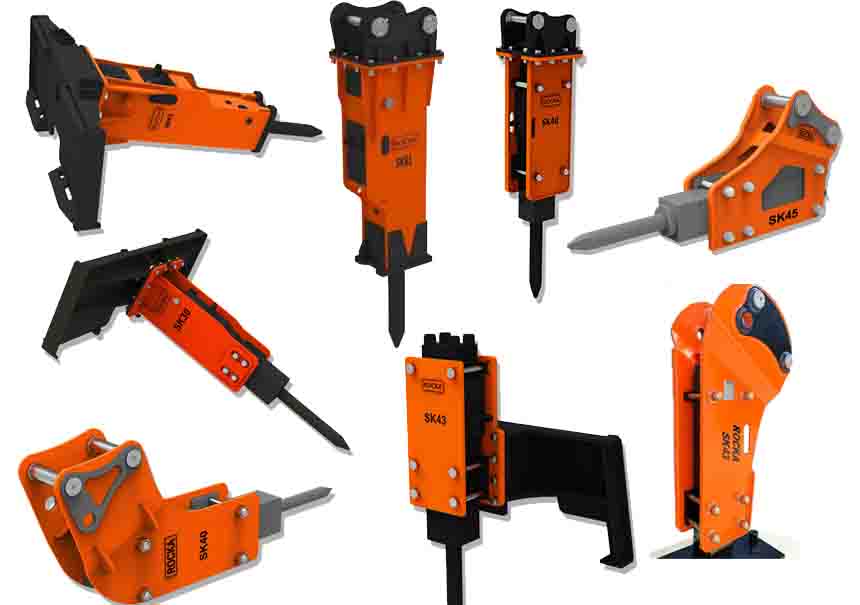 :
:
-
Daily Visual Inspections: Check hydraulic hoses for cracks or leaks, inspect the breaker shell for damage, examine pins and retainers for wear, and verify the tool point for cracks or chipping .
-
Regular Lubrication: Grease the breaker tool every two hours of operation, or more frequently in dusty conditions. For hammers without auto-lube systems, manual greasing is essential .
-
Hydraulic Fluid Maintenance: Check and replace hydraulic fluids regularly, as contaminated or old oil can damage both the breaker and the carrier’s hydraulic system .
-
Bushing Inspection: Remove the breaker tool weekly or every 50 operating hours to check the bushing for wear .
-
Proper Operating Technique: Never hammer at the same spot for more than 15 seconds, ensure the tool is seated securely before activating, and never use the tool as a pry bar .
The Future of Hydraulic Breaking Technology
As construction and demolition projects become more complex and environmentally sensitive, hydraulic breaker technology continues to evolve. Modern advancements include:
-
Anti-Blank Firing Technology: Prevents the breaker from operating when the tool is not in contact with material, protecting internal components from damaging shockwaves .
-
Nitrogen Gas Accumulators: Enhance impact energy while reducing pressure spikes that can damage carrier hydraulics.
-
Auto-Greasing Systems: Automate lubrication to ensure consistent protection and reduce maintenance requirements.
-
Variable Impact Settings: Allow operators to adjust blow frequency and energy to match specific materials and applications .