

When operating an excavator hydraulic breaker, correct operating techniques directly determine work efficiency and equipment service life. Improper operation such as blank firing is the leading cause of premature breaker component failure. Yantai Rocka shares professional operation guidance for rock, concrete and trenching projects to help operators reduce downtime.
Apply Proper Down-Force
Do not apply excessive down-force. Too much pressure lifts the carrier off the ground and may damage your hydraulic breaker and excavator. Insufficient down-force makes the tool bounce on material and triggers blank firing. Never use the breaker for pounding or prying work.
What is Blank Firing & How to Prevent It
Blank firing happens when the breaker tool loses full contact with the target material. Without resistance, the piston strikes the tool and retainers, transferring shock back into the front head and carrier. It creates a distinctive metallic ringing noise and often occurs right after hard rock breaks.
Master safe hydraulic breaker operation rules from Yantai Rocka. Learn how to avoid blank firing, set proper down-force and handle rock, concrete and trenching demolition work. Correct operation protects your excavator breaker and extends service life.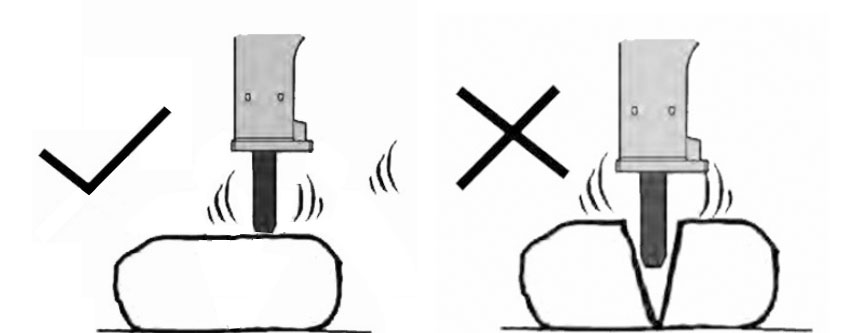
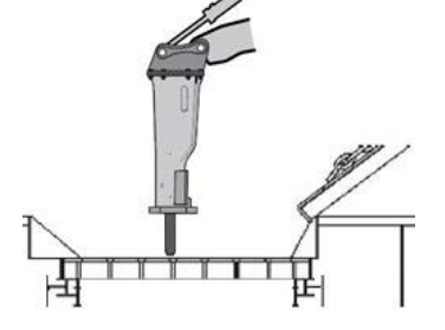
To avoid blank firing, operators should listen to the hammering sound. When the tone changes, the rock has split; release the trigger immediately to stop impact. For jobs on a grizzly bar, blank firing risk rises sharply. We recommend running the breaker in anti-blank firing mode.
Breaking Oversize Rock
Study the rock surface before starting. Place the tool on flat areas or natural seams and cracks for easier splitting. Ensure the rock sits on a solid base so the breaker can fully transfer impact energy.
Trenching & Excavation
Clear overburden first to expose the rock face. Penetrate the tool repeatedly in a small zone to loosen rock and create a hole. Use stepped or benched profiles for deep trenches. Adjust the trench side slope to match your breaker size. Reposition the tool every 10–15 seconds if no penetration occurs, and keep the breaker fully greased all the time.
Breaking Concrete
Strike repeatedly in one spot to loosen concrete and separate rebar. Rebar may need cutting to simplify debris removal. For concrete floors, use boom cylinder down-force to follow the tool through material. For vertical walls, coordinate boom, stick and tilt cylinders to maintain steady pressure. High blow rates deliver best concrete breaking performance; confirm your excavator supplies the recommended oil flow. Choose a chisel point for general concrete splitting, or a moil point for heavily reinforced hard concrete.
Final Reminder
Always maintain proper down-force aligned with the tool axis. Mastering these operating rules protects your Yantai Rocka hydraulic breaker, cuts maintenance cost and improves demolition productivity. If you need technical support for excavator breaker attachments, contact our team via rockahammer.com or Watch related videos on YouTube.